I was at my gym a few days ago describing my Literacy and Technology class to a friend. She is a staff member in a high school so was interested when I began describing digital natives vs digital immigrants. I said," I can speak and understand most of the language. I am definitely a digital native and my "accent" is becoming less noticeable, but I think it will always be there". She replied, "Well, I am a digital ignorant."
Several years ago I felt the same way. When I began my graduate courses I broke out into a cold sweat when, to use my time efficiently, I had to type a paper without pre-writing it by hand. It was a colossal effort. Now, I can't compose my thoughts unless I have a keyboard in front of me and thesaurus.com in the next window. As classes flew by, I became more adept at using Microsoft Word and other software. However, the WWW and Internet (I have learned they are two different entities) was a terrifying mystery. I saw it's value if only for research. I would never consider allowing students to blog with the outside world for fear of litigation in case something happened. If anyone ever mentioned that I would consider technology such as IPods or cell phones as beneficial tools in a classroom, I would have called the men in the white coats and insist they take that person away in a nondescript van with pads on the inside walls and shiny, white bars on the windows.
I currently work in a high school library. I am now not only thinking about using technology in my own future classroom but with my present students. Wait....did you hear that? It sounded like a howling dog being dipped in boiling oil. Oh, I know. I just suggested that IPod be used in the classroom for learning. That pitiful, enraged sound is my co-workers voicing their displeasure. They already think I am a crazy liberal. This will really send them off the deep end.
I would like to use a podcast in conjunction with the printed school paper to engage those students who are not strong readers and allow our multi-tasking digital natives to hear their news and do their homework at the same time. It would like to teach the school reporters to use higher order thinking to decide which stories to cover, how to present the news and be aware that what they do and say can have an impact in areas other than our school. As a former photo journalist, I hope they will feel the power of the press (blogging, twitter, texting) to create a community and inspire a desire to get involved with the school and outside community. Education is not just in the school building anymore.
I recently read an article about using cell phones and texting in a classroom. Cell phones in school were something that I previously opposed. The article described what would happen if a teacher gave students 10 minutes to text someone else and ask them several pre-determined questions. Extra credit was given if the other person was in another country. After I read the article my first thought was, what a great way to encourage writing with an authentic audience. A student can learn about other cultures, our culture and differing points of view. They can defend their own opinions, start a discussion, chart results like a poll and perhaps later change their opinion or discover why the other person has their beliefs based on research they did on-line. They can evaluate the sources and where the people they first texted get their information. The possibilities are endless.
I know that many of us will run into a negative technology sentiment in many of our schools. The teacher's traditional adversary, TIME plays a large part in the bad feelings about technology. However, I also know that I am armed with research and several inspiring videos that I can bring to my principal and hopefully get a presentation together to bring the faculty over to "the bright, light blue light".
This class is coming to an end but my learning is not. I still need to learn more about podcasting before I bring the idea to the school. I want to learn more about the SmartBoard and other uses for the IPod and cell phones in the classroom. I also want to thank Dr. Ludmilla Smirnova for her enthusiasm and for gently nudging me to the edge of exploration and allowing me to create my own lessons and learning. (She actually tossed me off the cliff head first, but I am an adrenaline junkie so I enjoyed it. This is my final post for this class but it is not the end. To read more of my opinions and other assorted information, go to my brand new personal blog at http://marciafigueroa3467.wordpress.com/
Thursday, July 30, 2009

I and U are not just letters anymore!

IJustine is a video blog by a young girl in Los Angeles. I would characterize her as a talented comedienne who is able to take the mundane and create a hysterical video. My favorite is one entitled, "I Want Pizza". I am still smiling however, I would not recommend this particular video for a class, choose another one.
I thought that this would be another avenue to teach about wriitng opinion papers. Students can write their opinion paper first and then broadcast it on YouTube. Another choice would be to first create a video and then use that as an ouline to write their paper. Either way, it will be engaging and just as one would have to do re-takes of a video to get it right, one also has to edit and revise a paper to get it right. A teacher could use the IJustine video to introduce the idea and create interest in the topic.
To see IJustime, CLICK HERE or on her picture above to see "I Want Pizza".
Thursday, July 23, 2009
Hot New Release!
The hot, new release of Marcia and Marcelene Figueroa's new TRUE digital book is out on YouTube today!
The authors used Windows Movie Maker to upload drawings, photos and clip art to create the movie. They then used Microsoft Paint to make creative changes to the artwork. Mrs. Figueroa stated, "Windows Movie Maker is a wonderful program. I was able to explore and use my creative talents to create a project that combined both of our talents and can be used to teach other students about the joy of poetry and everyday events.I also tried Animoto but found the process too restrictive. My creative juices were controlled by another and the video could only be 30 seconds long." She listed some positives and negatives about the Windows Media Maker publishing process.
Positives:
- Easy to use
- Fun to create using your own photos and in conjunction with other programs
- audio insertion was well designed
- engaging to students
- create an authentic audience for young writers
- can be used to teach students how to visualize what they are reading
Negatives:
- The audio had to be done several times to get it right
- the movie maker accepted the 9 x 12 drawings but they did not reproduce as such. many frames were cut short.
- The story could not be directly uploaded to Mrs. Figueroa's website. She had to use a middle man, YouTube to get a URL.
- Uploading to YouTube required IT assistance
The total production time from inception to publication was approximately 6 years. The idea for the book occurred to Mrs. Figueroa and her then ten year old daughter during an eventful day at their home daycare. The book is a short poem created by Marcia and illustrated by Marcelene. Although they always planned to have it published, time and resources were not available.
When asked if they plan to create another book, they both replied in tandem, "Absolutely"!
Wednesday, July 22, 2009
SelfEfficacy by Prof. Bandura, Ch. 6 TDC is is MUST READ!
I read the section in the Web Info section of our Teacher's Discovering Computers companion site titled, Self-Efficacy by Prof. Bandura and believe all teachers should read this. It briefly reiterates the old adage that, whether you believe you can or you can't, you are probably right. Bandura wrote that people who believe they are capable of success are more apt to be successful and are less likely to suffer from depression. This view of possible success influences the cognitive side of the brain (how one thinks), the affective side of the brain (how one feels, emotions), how one acts a(behaves), and how one motivates oneself.
The ability to view ourselves as capable begins at an early age and is directly influenced by parents, peers, educators and life's accomplishments and failures throughout life. Self-Efficacy is taught and nurtured.
Teachers can help develop self-efficacy by noting a child's developmental ability and creating situations where they have to exert some effort but success is possible. Passive praise is important but must be connected to effort. For example, praise a child for working diligently, not just for a good grade.
To me, it is a behemoth responsibility because people who do not learn to believe they can do things are more likely to develop depression and be less successful in life. There are long term individual and societal implications. I urge all teachers past, present and future to read this article and heed Bandura's advice! Here is the link: Self-Efficacy
The ability to view ourselves as capable begins at an early age and is directly influenced by parents, peers, educators and life's accomplishments and failures throughout life. Self-Efficacy is taught and nurtured.
Teachers can help develop self-efficacy by noting a child's developmental ability and creating situations where they have to exert some effort but success is possible. Passive praise is important but must be connected to effort. For example, praise a child for working diligently, not just for a good grade.
To me, it is a behemoth responsibility because people who do not learn to believe they can do things are more likely to develop depression and be less successful in life. There are long term individual and societal implications. I urge all teachers past, present and future to read this article and heed Bandura's advice! Here is the link: Self-Efficacy
Tuesday, July 21, 2009
Engrade is Enstyle
 I've just used engrade, the stylish on-line grade book at http://www.engrade.com/. The blurry (sorry) image above is the teacher page where I inserted the student grades. Overall, I liked it. It was easy to sign up, a teacher can weight projects and other assessments, including formative observations. For example, a written test may be weighted as only 15% of the whole grade and authentic projects may be worth more. The decision is up to the teacher. One can calculate extra credit, export the document to excel to do more individual work and the grades can be easily changed. Actually, the math calculations are done by the program so human error is only possible if the grades are inputted incorrectly. A copy of the assignment can be attached and the parents and students can both access their own grades and any missing assignments are listed as such. Parents or students cannot say they "did not know" an assignment was missing nor do they have to wait for a teacher to return their telephone calls. Each student is protected by an individual access code that is designed by the teacher. A teacher can look at the average grade for each assignment and decide if a lesson should be retaught or other changes be made. (If the grade average is abnormally low then something is either wrong with the instruction or the assessment.)
 The negative aspects of this site is a much shorter list than the positives. The parental/student access ability is a double edged sword. A parent may not comprehend how the grades are calculated or the theories why a project may be worth more than a written test. There may be some complaints to the teacher and needed explanations. I based all of my grades on 100 points because most people seem to understand this form. This system may requires a teacher to input grades in a timely manner so all grades are available when parents go to the site.
One thing I would like to see is a calculation for mode and an option to print grades on a bell curve. I would like to evaluate how the grades lie for each class.
Sunday, July 19, 2009
The News comes in many different forms
I just created my first class newsletter on LetterPop.com. It was not a bad experience but it did take me longer than I thought. Just like learning a new language, I will have to practice and then keep using it or lose it. Please be kind when judging my effort, it was my first try. Here is the link to my LetterPop page.
Encourage Success
Encourage Success
The Most Trusted Man in America
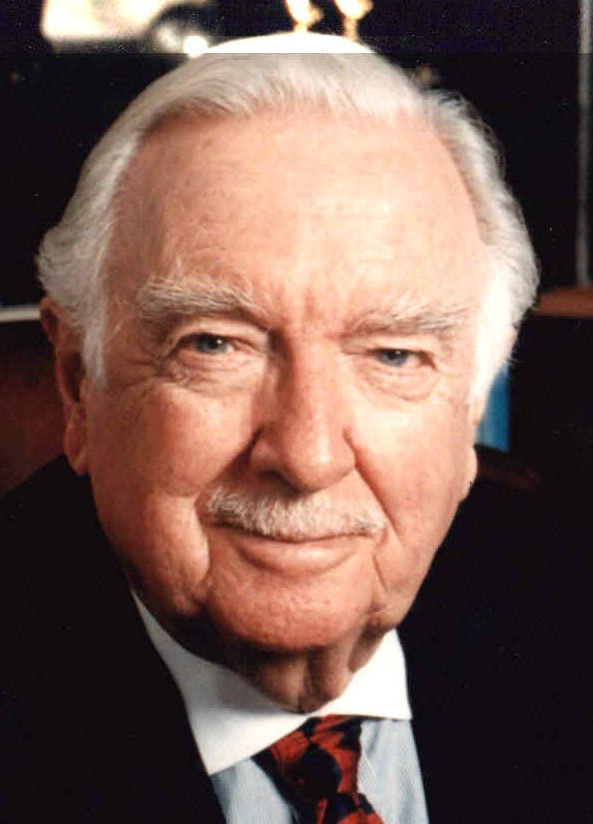
I was watching State of the Union today on CNN. They were recapping the news that long-time news anchor of CBS Evening News, Walter Cronkite had passed away. As a former photo journalist, I felt was moved at the news of his passing. They stated that with the passing of Cronkite so too went the last vestige of an era.
Cronkite was known as the Most Trusted Man in America. With the onset of twitter, blogging and other instant communications the era when everyone had to wait for the news to "come on" disappeared. CBS and NBC were the only networks where you could get the news on the same day as it happened because the broadcast was in the evening. Now, no longer is it only one person who delivers the information but a world wide network of people around the world. The news was once mystified and revered. It is now an ordinary occurrence to call/email/twitter a network/station and let them know what is happening. (I've done it.)
We no longer have the Most Trusted Man in America but the Most Actively Involved People in America. Good bye, Walter. I will miss your authoritative voice and unbiased reporting, but my melancholy is somewhat attenuated as I add my own authoritative voice to the news.
Cronkite was known as the Most Trusted Man in America. With the onset of twitter, blogging and other instant communications the era when everyone had to wait for the news to "come on" disappeared. CBS and NBC were the only networks where you could get the news on the same day as it happened because the broadcast was in the evening. Now, no longer is it only one person who delivers the information but a world wide network of people around the world. The news was once mystified and revered. It is now an ordinary occurrence to call/email/twitter a network/station and let them know what is happening. (I've done it.)
We no longer have the Most Trusted Man in America but the Most Actively Involved People in America. Good bye, Walter. I will miss your authoritative voice and unbiased reporting, but my melancholy is somewhat attenuated as I add my own authoritative voice to the news.
Subscribe to:
Posts (Atom)